




If you pour the menu measure into a sample and the foam has nowhere to go, the catalogue capacity hasn’t solved your buying problem. You still need a glass that presents the drink as intended and can be carried to the table comfortably. I’d settle the measured pour with the beverage team first, then try it in the exact model being quoted. Otherwise supplier and buyer can agree on a number while service staff inherit a rather different problem.
Define the Pour Before Choosing the Glass
Write the menu portion beside the way it will be served. Draft beer with a head may need a different fill level from a packaged drink in the same style of glass. The venue decides that serving measure. From the supplier, you need the capacity and dimensions tied to a particular model. I’d keep both entries on the specification rather than let one number stand for the two decisions.
‘To the rim’ is a perfectly useful measurement, provided that is what you mean to ask for. It isn’t necessarily a useful pouring instruction. I’d ask the supplier where the liquid was when the quoted capacity was measured, and whether the figure is nominal or belongs to this exact model. That answer matters before somebody copies a product-page number into a menu and treats it as the portion to be served.
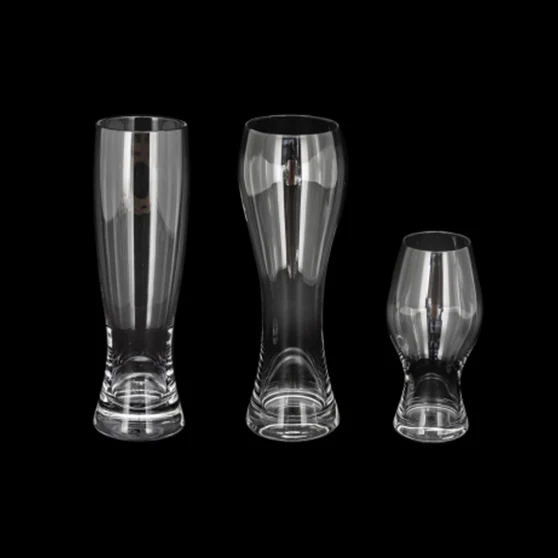
Perfect Select presents a beer-glass range within its broader glassware collections. Ask for the exact model code and product drawing rather than selecting by an image alone.
Test the Fill Line in Service Conditions
Use the normal venue measure to put the intended serve into a sample. Then leave the specification sheet aside for a moment and handle the filled glass. Is there the headspace you wanted? How does it feel on the normal tray, on the bar or table, and in the storage rack where one is used? I’d want those answers before standardizing a model; a capacity figure can’t show whether a full tray is comfortable to handle.
I’d label the sample record with its model code before putting the glass away. Alongside that code, keep the measured capacity and fill reference, height, rim diameter and base footprint. Otherwise two very similar shapes become surprisingly hard to distinguish on the next order. Use the units on the menu and purchasing sheet consistently, so the next comparison doesn’t quietly introduce a conversion or another way of measuring capacity.
Keep Product and Menu Records Aligned
Use the same approved model code on the menu record, purchasing entry and carton label. A replacement code is a reason to reopen the fill-line and service-guide checks. I’d do that even if the new glass looked almost indistinguishable from the old one. A small difference in the rim or capacity is exactly the sort of thing appearance alone can miss.
The company information provides background for product discussions. Request model-specific dimensions and a sample through Perfect Select and its contact page. Approve the glass only after the beverage lead and purchasing team agree on the pour, headspace, and storage fit.
Use One Measurement Basis Across Menu and Samples
What does each supplier’s number describe? One may have measured to the rim, another to a lower point. Record the unit and fill basis before comparing their quotations. Where it is unclear, ask for the model drawing or measure a sample. I’d resolve that before allowing the number onto either a menu or a purchase specification.
For several locations, give everyone one sheet with the menu portion, glass model, capacity basis and sample approval. I’d leave any proposed tolerance open until the supplier and buyer have agreed how to measure it. Looking at outside dimensions isn’t a reliable shortcut to the liquid volume: a thick base or curved bowl gets in the way of that estimate. The measured sample is a much better reference.
Review Service, Washing, and Storage as Separate Checks
The volume check can pass while the service check fails. Carry the filled glass on the actual tray and look at it on the table: is the planned appearance right, and have foam or garnish used space the brief overlooked? Ask staff about handling, then try the storage arrangement. Those are separate questions. None is answered simply by choosing a catalogue capacity that matches the menu number.
The wash routine is another question I’d put to the supplier for this exact model. A familiar-looking glass, or a familiar glass type, doesn’t establish that it suits the dishwasher. Get its care instructions, follow them, and try the venue workflow before adopting it at every location. File the approved handling method under the model code. Otherwise the next shift is left to infer the method from the glass on the rack.
Perfect Select’s beer-glass range can be shortlisted against the serving brief. Before approval, request the exact drawing, capacity basis, dimensions, and sample, then have both purchasing and beverage operations sign off on the same specification.
Create a Service Reference for Staff
Once approved, put the serving measure into the operating guide. Any visible fill reference used by staff needs to agree with that pour and be clear to follow. If you intend a permanent mark or decoration, settle its placement and suitability for this model before adding it. I’d use a reference photograph for recognition at the bar, but keep the code for purchasing. Reordering from a picture leaves too much room for a lookalike.
A substitute deserves its own sample trial. Changing the bowl, walls, rim or base may alter the apparent fill level even with a similar capacity label. Let beverage staff judge presentation while purchasing checks the dimensions, price basis and availability in the quotation. Record an accepted alternative as a new approved item. Keeping the original entry makes the change visible rather than quietly rewriting what used to be supplied.
Think about a glass moving between venues that share stock. Staff need to recognize what it is and which portion belongs in it. A documented item gives training, replenishment and any later audit something common to work from, particularly where the menu measure is closely controlled.
I’d put one glass from the approved lot aside with the capacity-check record. If the next delivery looks different, you can compare its height, rim, base and fill reference against something physical. A change that affects the pour or rack fit needs a review before use. Asking the team to ‘allow for it’ informally leaves purchasing and the supplier without a shared reference for resolving the difference.
At bulk-order approval, I’d expect to find the sample and its code together with the capacity basis and menu measure. If one has changed since the trial, repeat the fill test and amend the service guide. That is how the product being bought stays connected to the drink staff are expected to serve.
Key Takeaways
- A volume measured at the rim doesn’t automatically become the menu portion.
- Try the intended pour and ordinary handling with the exact glass being ordered.
- Keep the code and dimensions with the service guide and purchasing entry so they describe the same item.
FAQ
Q1: Does a glass capacity equal the serving size?
A: It may, but it doesn’t have to. The glass might need room above the pour for foam or for the presentation the venue wants. I’d establish how the supplier measured capacity before treating it as a serving size.
Q2: How should a hotel confirm the intended fill level?
A: Pour the approved measure into the sample. Have beverage operations and purchasing review that glass together, including the intended headspace and practical handling.
Q3: Why record rim diameter and base footprint?
A: They tell you which model you have and help answer the tray and storage questions. Knowing only the capacity leaves you with no clear idea of how the glass will fit or handle.
Q4: Can a buyer substitute a similar-looking beer glass?
A: Try the substitute first. Recheck its dimensions and capacity, then the intended fill and storage fit. Looking alike doesn’t establish that it can take over the same service role.
Q5: What should be requested from Perfect Select?
Ask for the exact model code, drawing, dimensions and capacity basis, with a sample for the fill trial. After approval, keep its fill reference and service guide with that record. A proposed alternative needs the same fill and handling check, so staff continue to use a glass that matches the agreed menu measure.

Post Comment