




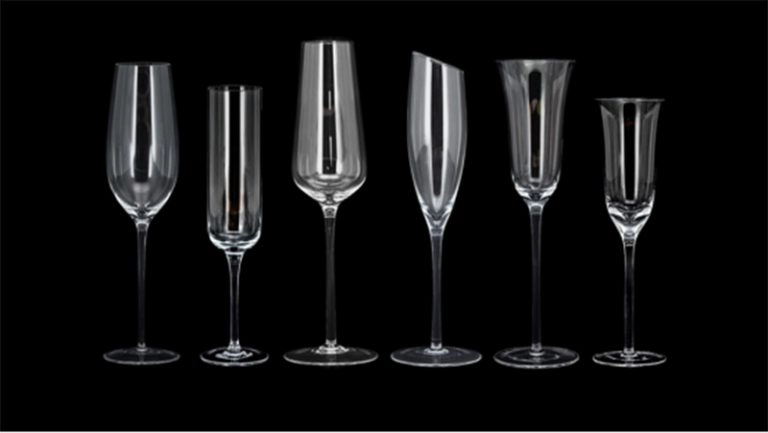
Yes, but only when the phrase ultra-thin crystal is treated as a specification to verify, not a visual compliment. For commercial buyers, the useful B2B glassware product trends 2026 are moving toward a sharper question: can the rim, stem, base, dimensions, process controls, and service routine work together in the intended venue? Perfect Select gives buyers a product range with listed material, processing, dimensions, capacity, and weight details, which makes that conversation more concrete.
The Champagne Glasses range lists lead-free crystal glass, hand-blown processing, hospitality use, and model measurements. It does not publish wall thickness. Treat that as a procurement question and request the measurement before ordering.
Can Ultra-Thin Crystal Work in Commercial Service?
It can work when the design brief and service routine match. Thin-profile stemware suits controlled hospitality settings, but it needs a closer review of rim, stem, balance, and handling than a heavy tumbler.
The Published Product Claim
The Champagne Glasses page identifies the material as lead-free crystal glass and the processing as hand blown. Those are useful facts, but they do not tell you the wall thickness, rim thickness, annealing schedule, or acceptance limits. A serious buyer should ask for the details that are not visible in a web photograph.
The Commercial Setting
Thin-profile stemware is more naturally matched to controlled service: a hotel bar with trained staff, a wine-led restaurant, a tasting counter, or an event with a defined setup routine. It is less suited to a brief that asks one glass to serve every drink, every counter, and every high-speed task. The purchase should follow the operating scene.
The Real Decision
The question is not whether a light glass looks refined. Ask whether the supplier can hold the approved shape, rim, stem, base, and finish across production. That is why the sample approval file matters as much as the catalogue image.
Rim, Stem, Base: The Working Geometry
Commercial suitability begins with geometry. A buyer can discuss thinness without reducing the decision to grams or millimetres. The practical review is how each part of the glass behaves at the table, on the shelf, and in the hands of staff.
Rim Definition
Ask how the rim is formed and checked. A clean rim gives the drink a more precise contact point and helps the glass feel finished. Confirm whether the approved sample and production pieces follow the same rim profile, especially when the design depends on a narrow silhouette.
Stem and Base Balance
A slender stem still needs a base that sits evenly and a transition that feels controlled. Check that the stem is centred, the foot is level, and the assembled glass stands without an obvious lean. These checks belong in sample review and incoming inspection, not only in the design discussion.
B2B Glassware Product Trends 2026: Weight and Capacity as Buying Signals
Weight is not a durability score, and capacity is not a service standard. Together, they are useful buying signals because they show how different models may fit different commercial roles. In B2B glassware product trends 2026, this kind of specification-led comparison is more useful than calling every light glass ultra-thin.
Model Weight
The listed Champagne Glasses models range from 68 g to 121 g in the examples below. That spread can change how a glass feels in a server’s hand and how it is arranged in a storage system. It does not prove a performance result. It tells you which models deserve a closer operational review.
Capacity and Format
A 170 ml or 180 ml format can suit a controlled sparkling pour, while a 350 ml or 370 ml format may give a menu more room for a larger presentation. The correct choice depends on the venue’s pour guide and event format. Full capacity should never be mistaken for the intended serving volume.
| Model | Capacity | Height | Top Diameter | Width | Weight | Useful Review |
| DLZ 019 | 225 ml | 245 mm | 47 mm | 48 mm | 100 g | Formal sparkling pour |
| DLZ 020 | 260 ml | 265 mm | 48 mm | 63 mm | 68 g | Light profile shortlist |
| DLZ 003 | 260 ml | 270 mm | 46 mm | 82 mm | 110 g | Broader table presence |
| DLZ 010 | 260 ml | 295 mm | 45 mm | 61 mm | 103 g | Tall toast service |
| DLZ 023 | 370 ml | 285 mm | 48 mm | 80 mm | 106 g | Larger presentation |
| DLZ 025 | 350 ml | 295 mm | 47 mm | 88 mm | 116 g | Expanded menu format |
The table uses specifications published for the Champagne Glasses range. Because no thickness value is published, the buyer should request that measurement or an agreed tolerance when thin-wall construction is central to the brief.
What a Supplier Should Confirm Before Production
A commercial order becomes safer to manage when the design intent is translated into checks. You do not need unsupported performance promises. You need a written specification that tells both sides what the approved glass must look and measure like.
Specification Sheet
Record the model code, capacity, height, top diameter, width, weight, material description, color, and intended use. If ultra-thin construction matters, add wall and rim thickness, tolerance, and the method used to measure them. If those fields are not available, mark them as open items rather than filling them with guesses.
Process and Quality Checks
Ask how the supplier reviews the rim, stem-to-bowl connection, base level, clarity, dimensions, and weight. For hand-blown glassware, sample comparison and production inspection are especially useful because the buyer needs a clear reference for shape and finish. The exact inspection frequency and acceptance limits should be agreed before production.
When the Champagne Glasses Range Makes Sense
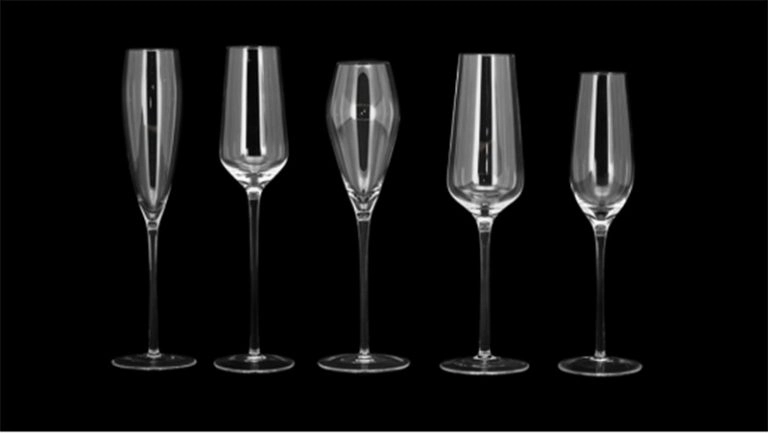
The Champagne Glasses series is a sensible starting point when the project needs lead-free crystal glass, hand-blown processing, and several listed formats for restaurant, hotel, or bar service. The range includes 11 models, so the buyer can compare shape and weight instead of forcing one design into every setting.
Controlled Hospitality Service
Choose from the range when staff can follow a defined setup and the glass has a clear role. A formal hotel reception, a wine-focused dining room, or a small cocktail and sparkling menu can benefit from a shape selected for that scene.
When to Widen the Search
Widen the search when the brief requires a universal glass for spirits, beer, wine, and sparkling drinks, or when the storage system cannot accept the chosen height and width. The correct procurement decision may be a different glass family, not a forced compromise inside one range.
From Design Intent to a Commercial Order
For thin-profile stemware, the final buying judgment should be conditional and clear: proceed when the shape suits the service, the material and process are documented, the missing thickness information is resolved, and the sample becomes the reference for production. That is a stronger decision than relying on the word ultra-thin alone.
Sample Approval
Approve the exact model and record the points that matter: rim feel, stem alignment, base seating, visual clarity, dimensions, weight, and finish. Keep the approved sample description with the quotation and purchase order.
Service Support
For custom packaging, coordinated ranges, or a more detailed sourcing brief, review the glassware service options and ask which information the team needs before quotation. A focused brief saves time on both sides.
Contact and Final Verdict
Commercial use is a fit question, not a slogan. Choose the Champagne Glasses range when the venue can support a defined stemware routine and the supplier can confirm the required measurements and inspection logic. Before contacting Perfect Select, prepare the model codes, quantities, service setting, storage measurements, and thickness questions. The resulting quotation should state what is confirmed, what remains open, and which sample controls production.

Post Comment