




I would not approve stemless wine glasses for restaurants in a quiet office. Take the sample to a dressed table, pour the wine the venue actually sells, and ask a server to carry six of them. Then find the shelf. A low glass looks wonderfully uncomplicated in a photograph; six broad bowls on a round tray can tell a rather different story.
There is usually a point in the meeting when somebody says, “It can be the water glass too.” Perhaps it can. That is exactly the sort of claim a sample ought to earn. Put the wine and water versions together with the plates and ask a new member of staff which is which. If the answer depends on remembering a tiny difference in volume, the evening shift may have a problem the buying team has missed.
Bring the Wine List to the Sample Meeting
What is this glass being bought to do? “Casual dining” is not quite an answer. Bring along the measures scribbled beside the till, plus any drink that may borrow the same glass. Red wine, water, and the short house cocktail are three separate trials, however convenient one universal answer may sound.
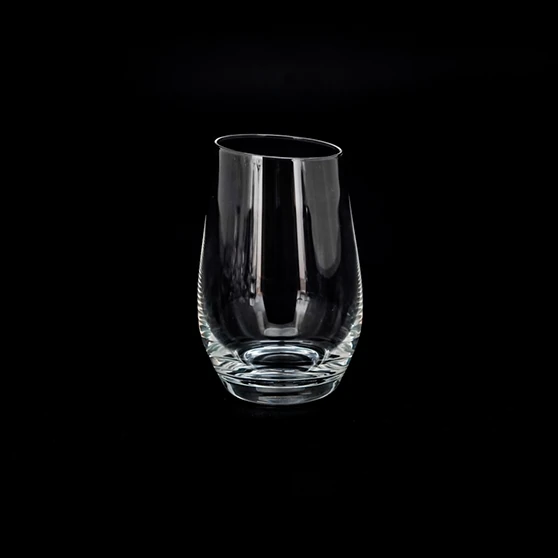
The stemless glass range shows how wide the choice can be. The page gives DLZ 090 as 600 ml; DLZ 091 drops to 420 ml, and DLZ 092 to 260 ml. Useful for the shortlist, yes, but not a pouring instruction. On my sheet, the maker’s figure and the bar measure never share a box.
Say the red-wine measure happens to be 150 ml. Pour it twice, once into each of the 260 ml and 600 ml candidates, and take the guest’s chair. From there the two versions rarely look as similar as their catalogue pictures. Someone may still vote for the larger bowl. Fine; at least the vote now concerns the drink customers will see.
Recipes move. Today’s 110 ml cocktail might reach 130 ml before the menu goes to print. Hence the date in the corner of my trial sheet. Change the drink later and out comes the sample again—no debate about who made a mistake.
Do not forget the smallest serve. It can look rather lonely in a generous bowl, while the neatest compact option may quarrel with a cube or peel. This is a five-minute argument at the table and a needlessly long one over a spreadsheet.
Find Out Where the Fingers Land
On a stemless piece, the artwork and the fingers compete for the bowl. Pass the plain sample around before commissioning a proof. Watch the thumb, particularly on a smaller hand and on glass that is no longer perfectly dry. A logo hidden by the natural grip has been placed for the drawing rather than for its owner.
For now, a scrap of removable tape can play the logo. Mine has looked perfectly centred until the first sip hid it behind a thumb. Shift the scrap, refill the glass, and save the decorated sample for after this small piece of theatre.
There is wine behind those fingers, of course. Its starting temperature and time on the table make the consequence specific to this service. Rather than inventing a rule for every colour of wine, leave the real measure through an ordinary course and ask the beverage team what it thinks.
“Feels good” is pleasant feedback but not much of a record. Why, exactly? One tester may like the way the wide point settles into a palm; another may keep creeping towards the rim. I write down both reactions. Next year’s buyer deserves more than three cheerful ticks.
Take the Samples on the FridayNight Route
DLZ 090 is listed as 100 mm wide and DLZ 091 as 91 mm. Nine millimetres is easy to shrug at until glass number six arrives. Plan from the fattest point, not from openings of 66 mm and 70 mm. The bowls, after all, are what meet their neighbours.
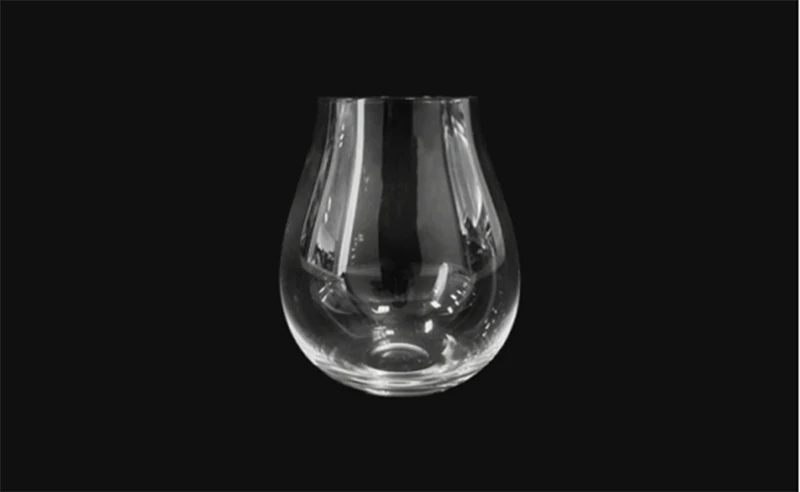
I begin dry and empty. The expected load goes around the corner, through the troublesome doorway, and down to table height. Bowls touching on the turn? Remove one. Proving that eight can be balanced once is a poor substitute for six that staff will willingly carry all evening.
Then add the drink. The product page lists DLZ 090 at 149.5 g and DLZ 091 at 184 g when empty. Liquid, garnish, and the tray itself still have to join them. I calculate the load, then hand it over. The numbers cannot feel a strained wrist; a server can.
Write the agreed tray count on the service plan. Dropping from eight to six could add a rush-hour journey, so the bar may want a couple more clean pieces waiting. Plan around the extra trip instead of quietly restoring the rejected load.
If water is the promised second job, serve that too. Once the labels are gone, two clear tumblers can become cousins staff keep mixing up. The distinction needs to be visible at arm’s length, without a server having to inspect the base.
Count What the Shelf Can Actually Hold
People call stemless glassware easy to store, and reduced height certainly helps. Width has not gone away. The DLZ 090 figures are 120 mm high by 100 mm wide. Now visit the shelf, where brackets, raised lips, stray coffee cups, and a reaching arm ruin the lovely rectangle drawn on paper.
Fetch one from the back without disturbing the front. Twelve by three sounded excellent in my notebook. If the last four require a small evacuation of the other twenty-four, however, the shelf never offered thirty-six useful positions.
I would label the proposed position for a week before ordering. During that week, the shelf may acquire coffee cups, spare carafes, or whatever else has been looking for a home. This is helpful information, not an inconvenience. Storage plans made in an empty corner have a habit of becoming fiction once service resumes.
Reserve cartons need their own address. Put inner-pack quantity, master-carton count, and carton dimensions on the receiving note. The bar shelf is for loose glassware; receiving may know an excellent home for the cardboard if it hears about the delivery in time.
Look once more from the server’s side of a completed table. Perhaps the wine glass disappears behind the menu; perhaps it becomes the water tumbler’s twin. Add a candle, a bottle, and two more clear pieces, and the showroom’s obvious distinction is suddenly not obvious at all.
A Sink Test at Closing Time
For these pieces, the product note specifies hand washing in warm, mild water and a soft drying-and-polishing cloth, preferably microfiber. It warns about bleach, acidic liquids, scourers, sudden temperature change, and hard knocks. I would print that page, circle the model, and leave no room for instructions borrowed from a lookalike.
I would ask the person who closes that area to do the trial. Can a hand or permitted soft aid reach the inside without being forced? Where does the wet glass wait, and how is it lifted for polishing? A buyer can complete one careful wash quite easily. Six pieces arriving with the rest of the dinner glassware make a more honest test.
Its low shape grants no automatic trip through a dishwasher; this care note says hand washing. A venue that cannot work that way needs to raise the point while models are still being shortlisted and obtain directions for the exact alternative. Hundreds of glasses later is an expensive time to discover the mismatch.
Time the trip back. “Washed” is not “ready at the bar”: draining, polishing, inspection, and the walk itself lie in between. On a busy night, waiting for a free patch of counter may take longer than any of them. That queue belongs in the stock count.
File the successful routine beside the model code. “Handle carefully” tells the next shift very little. One photograph of the cloth, drying position, and shelf arrangement will probably save a page of explanation.
Leave the Next Buyer a Useful Sample
Once a model wins, date and label it. My short record would include nominal capacity, working pour, height, widest diameter, empty weight, tray count, shelf count, care method, and logo position. I would also name the tested recipe and reviewers. That gives a future substitute something harder to beat than a flattering photograph.
Spell out Perfect Select on the record rather than trusting an abbreviated supplier name. The service information begins the custom and packing discussion. This particular quotation must finish it with a model, artwork, pack, quantity, and date.
The comparison of stemmed and stemless wine glasses belongs earlier, when the structure itself is undecided. Here the question is smaller and more useful: did this model survive this restaurant’s evening?
Send the approved reference and notes when you contact the team. “We need practical restaurant glasses” leaves a lot to interpretation. A model code, tested pour, decoration position, pack format, quantity, and target date give both sides something definite to discuss.
Conclusion
Choosing stemless wine glasses for restaurants does not require a laboratory. I would rather have the actual drink, four pairs of hands, Friday’s route, the closing sink, and one look at tomorrow’s shelf. Keep whichever piece still seems sensible after that untidy little tour. The dog-eared notes will outlive the catalogue gloss.

Post Comment