




At a hotel or restaurant buying meeting, I would ask to borrow the decanter and take it straight to the sink. The tasting may take an hour; washing will happen day after day. So give the sample an ordinary rinse, turn it into the position staff expect to use, and walk away. When the next shift starts, look inside. This very plain check tells you more about wine decanter cleaning and drying than an instruction added after delivery.
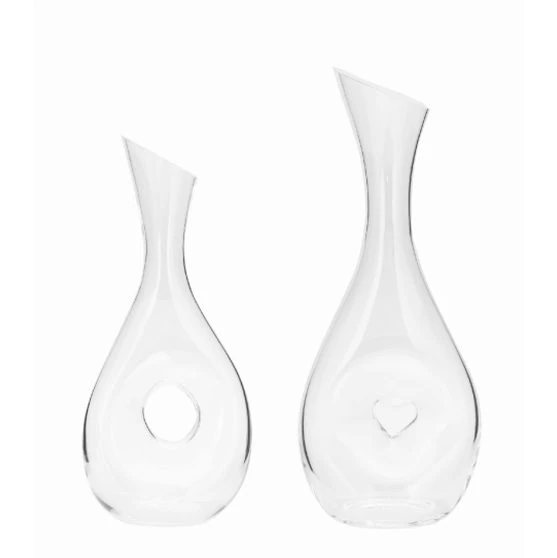
The favourite at the table can lose some of its lead beside the wash area. Fingers will not reach far into a broad body, while a bend may keep the final drops out of sight. I am not arguing against either form. Both can work beautifully in the dining room. The less glamorous question is whether this exact piece has a repeatable cleaning routine and somewhere steady to dry.
Read the Care Note Before Anybody Starts Testing
Request the care sheet with the sample, while the model reference is still clear in everybody’s email. Instructions for a lookalike will not do. The Unique Shape Wine Decanter range is hand-blown; its care note calls for warm, mild water and handwashing, and warns against contact from flatware. Give those limits to the stewarding team before the sink trial, not afterwards.
Who gets a turn with it? The buyer, yes, and also whoever may face six used decanters after dinner service. Wet hands change the grip. So does rotating a wide body under a tap and carrying it across to the drying area. None of that shows up during five quiet minutes at a desk.
Nothing needs to be proved by rough handling. Follow the listed temperature and cleaner guidance, using a soft aid only if it suits the item. A sudden change from hot to cold would turn the exercise into something else entirely. Nor would I put the sample in a dishwasher on the strength of a broad glassware claim. Permission has to belong to the selected SKU.
See What the Opening Means at the Sink
Opening diameter looks like a pouring measurement. At the sink it becomes an access measurement too. Can the approved soft tool enter without being forced? Once inside, can it turn? Then tip the decanter and see how the rinse water leaves. The figure in a specification cannot show how your wrist meets the faucet.
The lead-free crystal glass wine carafes show why you need the model number. DLZ 067 is listed with a 91 mm top diameter. The other figures are 60 mm for DLZ 068, 80 mm for DLZ 069, and 62 mm for DLZ 070. That is enough to make a sensible sample list. It is nowhere near enough to rank the finished pieces. Height, width, weight, and the interior form are still waiting to be tried.
DLZ 068 shows why the sink belongs in the review. It is listed at 268 mm high, 250 mm wide, and 633 g empty. Add rinse water and the balance changes immediately. Rotate it under the faucet, paying attention to the sink wall as well. Can a wet hand find a comfortable hold? For the trial, a folded soft mat on the counter keeps a simple handling question from becoming an avoidable accident.
A rigid brush that only just passes the opening is not automatically the answer. Ask whether the tool and movement suit the product. If the far side of the body remains hard to reach, raise that point while the sample is under review. Write the agreed method beside the model code; otherwise, a later shift may improvise.
Do Not Stop the Clock When the Rinsing Stops
Start the drying check as soon as the rinse water leaves. Note the time and set the vessel exactly where it would stand after service. Look again after ten minutes, then an hour. If overnight drying matters to the operation, return in the morning. The neck may have stopped dripping long before a low curve inside becomes dry.
The proportions in the Perfect Select range vary quite a bit. DLZ 071 is listed at 380 mm high and 270 mm wide. DLZ 072 is only 230 mm high but reaches 295 mm in width. You would not expect them to use the same patch of shelf or sit at the same angle on a drying support. Put both measurements into the back-of-house plan.
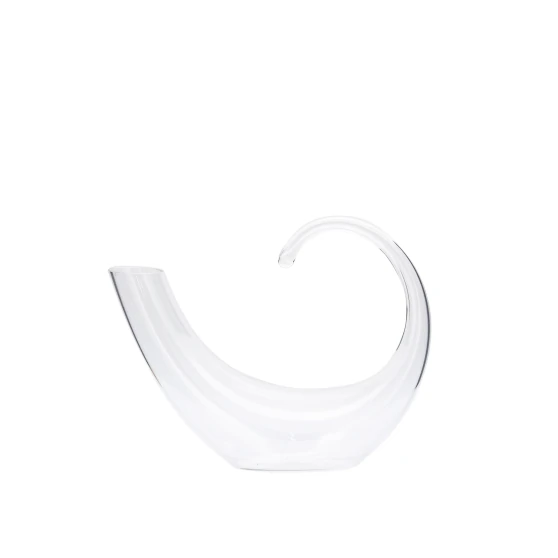
A drawing of a support is no substitute for placing the glass on it. The vessel should sit without wobbling, the rim should clear the shelf, and air should have somewhere to go. Almost anyone can balance a wide decanter on a narrow peg for ten careful seconds. At closing time, that arrangement becomes much less convincing. Treat any required stand or rack as part of the approval and give it a permanent place.
Those last droplets often prompt an improvised solution. A cloth takes care of the outside, yet a tool pushed into a curved interior can be difficult to retrieve and may not belong there in the first place. Settle the method during sampling. If only one experienced employee can make it work, the method is not ready for an ordinary shift.
Check the Service Turnaround With Real Numbers
Picture an evening planned around twelve decanters. Perhaps four are on tables. Three more have not reached the wash area, two are being rinsed, and the remaining three are dry or on their way there. Those are example numbers, of course. Their point is simply that the dining-room count leaves much of the cycle unseen.
Use your own service records. How long does one stay at a table? How many can the sink area accept without crowding? Then ask when this shape is actually ready to go back into storage. Count the safe drying positions as well. A standard multiplier from somebody else’s restaurant cannot answer either question.
An empty kitchen makes almost any glassware plan look easy. Try again with the usual racks and glasses occupying their space. Walk the piece from collection through the sink area and on to its drying and storage positions. If somebody has to carry a wet, wide decanter through a congested station, either the route or the stock plan needs another look.
Use issue records when you set the reserve. One round percentage is tidy on a spreadsheet, yet two shapes may have very different issue records. The final count ought to make sense without a formula: pieces serving guests, pieces somewhere in cleaning, clean stock ready to go, and a reserve drawn from experience.
Bring the Table Test Back Into the Decision
The sink test is not the whole decision either. Use the intended working pour, take the usual tray, and serve into the glass selected for the table. Pay attention to the hand position and to how readily the stream can be stopped. Take that very same sample back for cleaning. You want one model that makes sense at both ends of service.
The four Unique Shape listings range from 920 ml up to 1,500 ml. Capacity tells you which vessel you are holding. It does not tell staff where to stop pouring. Pour the intended wine amount and decide what feels sensible to carry. The product care notes warn against overpouring and describe these pieces as holding a single bottle of wine.
Because the range is hand-blown, put variation into the approval discussion. The listed notes allow for small measurement and colour differences as well as air bubbles. “Handmade” should not become an answer to every inspection question. Ask for the current tolerance, the check at the opening and base, and an agreed appearance limit.
Put Drying and Storage Into the Purchase Record
When the sample is approved, keep the model code with the practical notes. I would include capacity, dimensions, target weight, care method, cleaning aid, rinse steps, drying support, observed drying time, storage position, and the reviewer. One photograph of the agreed setup will be more helpful next year than a message saying “same as last time.”
Add the pack to that record. Ask for the quantity per selling unit and per master carton, as well as the protection between pieces. Unpack the sample once: the easiest-looking grip may put pressure on the wrong area as it leaves the insert. With a retail box, read the care copy and compare it with the routine the team approved. For hospitality, put the handling note where the people at the sink will actually see it.
For a custom project, glassware service can tie the chosen shape to its sample and pack. Send the model, use, quantity, care questions, and packaging request to the contact team. A vague request for “a good decanter” is hard to price. A tested sample with a short record is not.
Conclusion
Sort out wine decanter cleaning and drying before the sample decision is closed. Pour from it, wash it once from start to finish, and return after a realistic drying period. A vessel that fits the sink, rests securely, and goes back into storage without a wrestling match has passed a useful service test. Good looks can then be part of the choice instead of the whole choice.

Post Comment