




Are you sourcing a wine decanter that needs to work at the table, on a retail shelf, and inside a branded gift box? Shape attracts attention, but buyers still have to check capacity, pouring control, cleaning, decoration, packing, and the evidence needed to approve a repeatable order.
This guide is for hotel groups, restaurants, retailers, gift brands, and importers comparing custom wine decanters. It uses the published Perfect Select DLZ 071 to DLZ 074 models as a starting point. The current drawing, physical sample, and packed sample remain the final references for any open field.
Define the Commercial Use First
Hotel Service Retail and Corporate Gifts
A hotel may need a one-bottle format for table service and a clear instruction for staff. A gift brand may choose an unusual curve because the silhouette has to sell before the customer handles it. A restaurant buyer may care more about pouring control, cleaning, and whether the decanter sits securely on a service station.
Write the use case into the brief before choosing the most unusual shape. State the wine volume, target fill level, retail or hospitality channel, logo position, packaging format, and expected quantity. One supplier may quote very different decoration, inspection, and box requirements for the same glass family when the sales channel changes.
Also decide how the item will be sold. A single decanter, a decanter with glasses, and a gift set with a printed insert are different commercial units. The same body shape can require different carton dimensions, barcode positions, copy, and approval records.
Compare the Four Published Models
Capacity and Overall Size
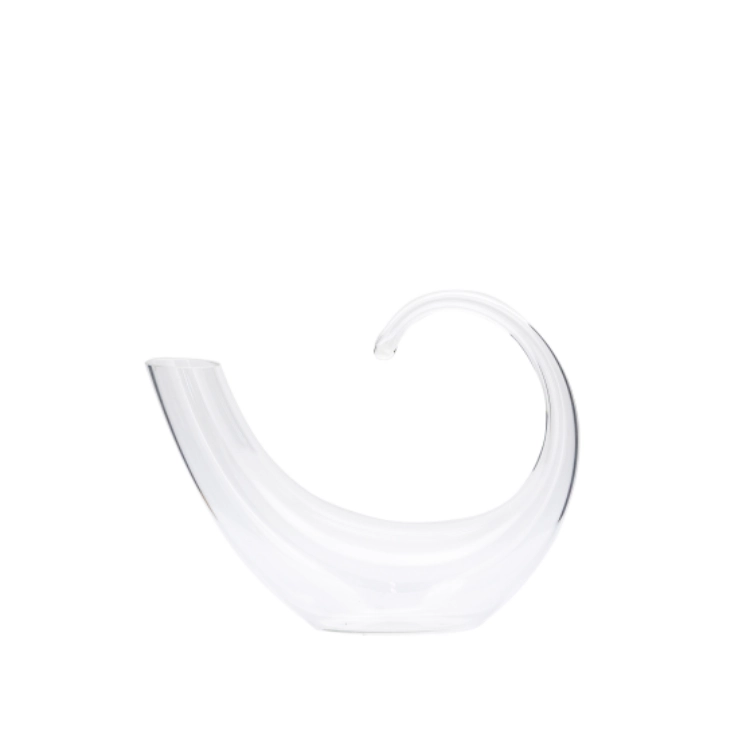
The Perfect Select Unique Shape Wine Decanter detail page lists four lead-free crystal models. DLZ 071 is 1,500 mL, 380 mm high, 45 mm at the top, 270 mm wide, and 570 g. DLZ 072 is 920 mL, 230 mm high, 50 mm at the top, 295 mm wide, and 542 g. DLZ 073 is 1,400 mL, 360 mm high, 55 mm at the top, 205 mm wide, and 566 g. DLZ 074 is a 1,100 mL U-shape with a 335 mm height, 45 mm top diameter, 200 mm width, and 415 g weight.
| Model | Capacity | Height | Top diameter | Width | Weight | Material |
| DLZ 071 | 1500 mL | 380 mm | 45 mm | 270 mm | 570 g | Lead-free crystal glass |
| DLZ 072 | 920 mL | 230 mm | 50 mm | 295 mm | 542 g | Lead-free crystal glass |
| DLZ 073 | 1400 mL | 360 mm | 55 mm | 205 mm | 566 g | Lead-free crystal glass |
| DLZ 074 | 1100 mL | 335 mm | 45 mm | 200 mm | 415 g | Lead-free crystal glass |
Treat these numbers as published starting values. Confirm the current drawing, usable capacity, measurement method, dimensional tolerance, weight tolerance, and carton dimensions for the exact SKU. A headline capacity is not automatically the same as the intended fill line, so mark the target service volume on the approval sample.
Check the Pouring Path
The unique-shape range uses a wide body for wine exposure and a curved or slanted pouring path. A physical sample should answer practical questions: where does the first pour land, how much liquid remains in the body, does the base sit steadily, and can the opening be cleaned with the agreed care method?
Test the intended pour with water before using wine for a service check. Mark the target fill level, note the angle used by staff, and record whether a drip forms at the mouth. These are approval observations, not unsupported product guarantees. The signed sample should identify the SKU and drawing revision.
Make the Shape Work for the Brand
Sample and Decoration Approval
Send a reference image, target capacity, logo file, decoration position, viewing distance, and colour reference. A curved surface can change how a logo reads from the front, side, and table. Record the approved orientation, artwork revision, and sample number.
Ask for a placement proof before production. Check the logo on the actual curve, not a flat rendering. Review its width, edge definition, position relative to the pouring mouth, and appearance when the decanter is partly filled. Decoration method, curing, abrasion performance, and colour tolerance are To be confirmed unless stated in the quotation or test record.
For a broader clear-carafe comparison, buyers can also review the Perfect Select lead-free crystal glass wine carafes page before narrowing the RFQ.
Plan the Gift and Hospitality Pack
Box and Insert Fit
Perfect Select lists colour boxes and gift boxes as custom options. A tall or wide decanter needs a pack designed around the actual sample. Ask for the insert material, closure, printed copy, barcode position, care wording, and master-carton quantity. Approve the packed sample before approving the final artwork.
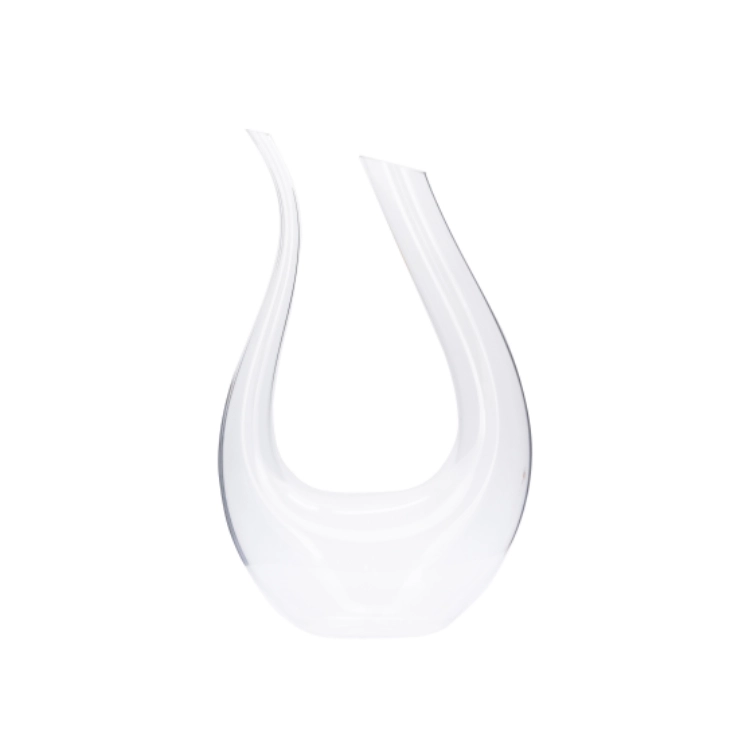
The Perfect Select red wine decanter range gives buyers another product detail page for comparing a more traditional service shape. Keep the final quote tied to the selected SKU rather than a category description.
Check every packing level: individual box, inner arrangement, master carton, label position, and pallet information if applicable. Confirm box dimensions, insert material, closure, gross and net weight, pack quantity, and printed copy. If a field is not documented, keep it To be confirmed. A gift programme should also carry the approved care instruction rather than an informal note added after packing is finished.
Confirm Care and Inspection
Handwash Only
These fragile handmade decanters are handwash-only. Use warm water with a mild detergent and avoid striking the glass with flatware. Put the approved care wording on the specification sheet and retail packaging.
Acceptance Record
Record capacity, height, top diameter, width, weight, pouring performance, base stability, rim condition, surface variation, air bubbles, logo position, and packaging revision. Handmade variation should have measurable limits agreed on the sample, not an open-ended acceptance rule. If the buyer needs a particular visual standard, attach reference images and state how the inspector should record a deviation.
Use a simple approval ladder: approve the plain glass and drawing, then the decorated sample, then the packed sample or mock-up. Bulk inspection should point back to those references. This is more useful than a general statement that the glass is “high quality.”
Ask for a Complete Decanter Quote
Information to Send
Send the model code, annual and opening-order quantity, reference image, target capacity, fill level, use channel, artwork, decoration method, box style, destination port, inspection requirement, and preferred Incoterm. Ask for MOQ, sample timing, drawing or mould work, production method, tolerances, unit price basis, packaging specification, inspection documents, payment terms, and quotation validity.
The Perfect Select contact page is the right next step when the brief is ready. Include every open field so the quotation can answer the commercial question in one file.
For a repeat programme, also ask how the approved sample will be identified in later production records. The model code, drawing revision, decoration proof, pack revision, and inspection reference should travel together. That simple record helps a purchasing team compare a new quotation with the version already approved for the same channel.
Compare the Whole Buying Decision
Compare quotations on the same SKU, sample status, artwork revision, pack format, quantity, and Incoterm. Note which costs are included and which remain open. A lower unit price is not a like-for-like offer if one supplier has omitted the gift box, inspection record, setup work, or case-pack requirement.
For a B2B project, the supplier process matters as much as the silhouette. The buyer should be able to connect the product page, current drawing, signed sample, decoration proof, packing specification, and final quotation. That record supports a clearer purchase decision and a more controlled repeat order.
Conclusion
Custom wine decanters should be selected as service tools and retail products at the same time. Compare DLZ 071 to DLZ 074, test the pouring path, approve the exact decorated sample, and build the gift or hospitality pack around that sample. Keep every unconfirmed field open until it appears on the approved drawing, quotation, or inspection record.

Post Comment