




Whisky glasses are of different shapes for different ways of serving whisky. Tulip-shaped glasses with a rounded bowl and a narrow rim are for neat whisky as well as for aroma-oriented tasting. The bowl of a tulip-shaped glass allows air to penetrate the spirit. The narrow rim of a tulip keeps the aromas close to the nose.
Low tumbler glasses with wide mouths and solid bases are generally more practical for serving whisky over ice, short drinks like an Old Fashioned and others of a similar nature. The extra space allows for easier addition of ice, the glass sits sturdily on a table and the wider mouthed glass is better suited to a more relaxed style of drinking.
There is no need to force every whisky into the same glass. Shape should follow the pour.
What Shape Is Best for Drinking Whisky Neat?
For neat whisky, aroma is key. Since no ice is added to the glass, it doesn’t need to be wide enough to fit additional contents. Rather, focus is placed on the relationship between the bowl of the glass and its rim.
A useful shape to nose whisky from is wider in the bottom or middle and then tapers up towards the top. This allows sufficient surface area to release all the aromas, but keeps them from quickly dissipating into the air.
Why Does a Tulip-Shaped Whisky Glass Work Well?
Tulip-shaped glasses are easily recognizable. Their bowls are larger than the opening, allowing the aromas to open up before being focused down a narrow rim.
It’s quite noticeable when trying to pick out fruit, spice, oak, smoke and the like as opposed to vanilla. A straight-sided tumbler can still hold neat whisky but the large mouth of the tumbler allows the aromas to dissipate quickly into the room.
This basic idea is also used in other specialist glassware. The shape of the bowl, the neck of the glass, the diameter of the rim and the amount of air above the liquid in the glass affect the perception of aroma. For whisky a gently tapered rim provides good control without producing an unbalanced glass.
If you want to compare a nosing shape with a traditional tumbler in more detail, the Rocks Glass vs. Glencairn comparison looks at the two formats from a drinking-use angle.
How Much Bowl Space Does Neat Whisky Need?
You do not need to fill a whisky glass. In fact, some empty space is useful.
Pouring a moderate amount of whisky in the glass allows for the aromas of the whisky to collect above the surface. It also allows for sufficient room to tilt or rotate the glass to inspect the whisky without having to pour too much and getting it up against the rim of the glass.
Capacity is not everything, a smaller beaker with the right bowl-to-rim ratio can be better for tasting than a large tumbler with more volume.
The wider range of Perfect Select products shows how bowl shape, capacity, base construction, and intended drink style vary across different types of glassware.
What Shape Is Best for Whisky on the Rocks?
Ice changes the job of the glass.
A narrow nosing glass may concentrate aroma well, but it is not especially convenient when you want to add a large cube. For whisky on the rocks, a lower glass with a broad body and wide opening usually makes more sense.
You have room for the whisky, ice, and a little dilution. The glass is also easier to hold once the drink becomes heavier.
Why Does a Wide Rocks Glass Work Better With Ice?
A wide mouth will accommodate a large ice cube without forcing it through the rim of the glass. Also, there is ample space within the glass to place smaller ice cubes, slices of citrus, and the components for short Whisky cocktails.
The open shape changes the aroma experience. It does not concentrate the nose as strongly as a tulip glass, but that is not necessarily a problem. A rocks pour is usually about temperature, dilution, mouthfeel, and easy sipping rather than close aroma analysis.
This is why a tumbler can be the better glass even though it is not the strongest nosing shape.
Why Does a Heavy Base Suit This Shape?
A substantial base keeps a short whisky glass planted on the table. It also changes the feel in the hand. Some drinkers like that extra weight, especially with ice or an Old Fashioned.
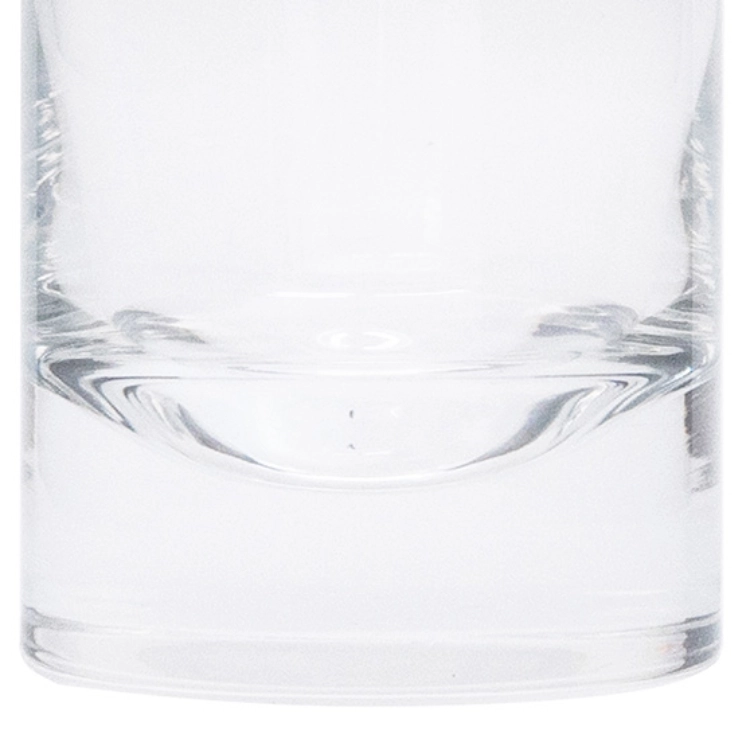
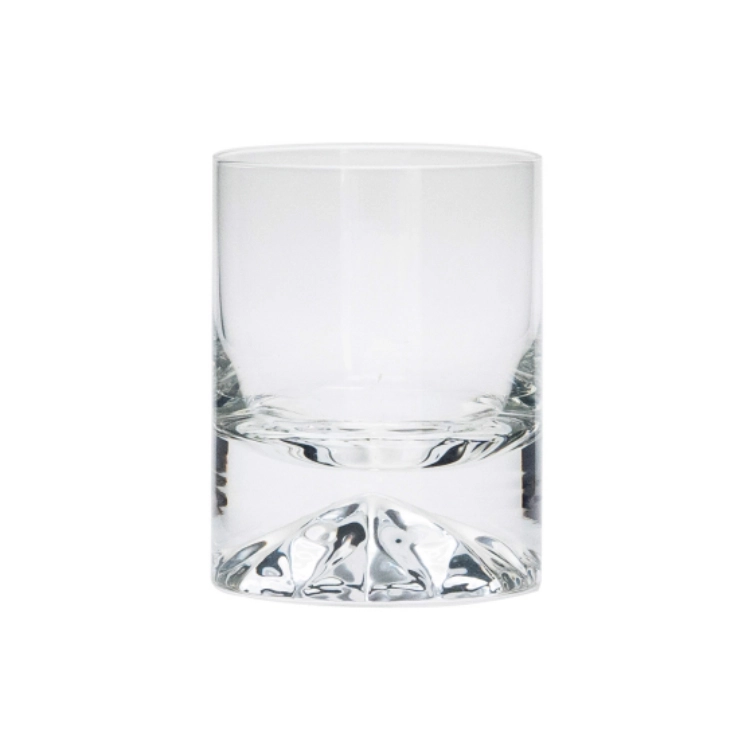
The Heavy Base Whisky Glass from Perfect Select fits this type of service well. The range includes DLZ 053, DLZ 054, and DLZ 055. All three are listed at 240 ml, with top diameters of roughly 81–83 mm. Their listed weights run from 434 g to 554 g, and the glasses are made from clear lead-free crystal glass. Perfect Select lists the range for restaurant, hotel, and bar use.
The important point is not that a heavy base improves aroma. It does not replace the tapered bowl of a nosing glass. Its value is more practical: stability, hand feel, room for ice, and the visual weight people often expect from a short whisky serve.
How Do the Main Whisky Glass Shapes Compare?
Whisky glasses become easier to choose once the intended drink is clear. The Whiskey Glass collection includes heavy-base, machine-pressed, and solid-colored heavy-base options, which also shows how different production and design choices can sit inside the same product category.
| Whisky Glass Shape | Best Use | Aroma Focus | Ice Space | Typical Feature |
| Tulip / Nosing Glass | Neat whisky, tasting | High | Low | Rounded bowl, tapered rim |
| Rocks Glass / Tumbler | Whisky on the rocks | Medium | High | Low body, wide opening |
| Snifter | Slow sipping | High | Low | Full bowl, narrower opening |
| Highball Glass | Whisky with soda or mixer | Lower | High | Tall, straight body |
| Heavy Base Tumbler | Short pours and whisky cocktails | Medium | High | Broad opening, substantial base |
There is some overlap. You can drink neat whisky from a tumbler and you can add a small amount of water to a nosing glass. The table is about what each shape does most naturally, not about strict rules.
That is also why buying a single “best whisky glass” without thinking about the serve can be misleading. A home drinker who mainly pours single malt neat has different needs from a bar serving Old Fashioneds throughout the evening.
Which Whisky Glass Shape Fits Different Drinking Styles?
The easiest way to choose is to start with the drink, not the appearance of the glass.
A shape may look good in a photo but still feel wrong once ice, garnish, liquid volume, and hand position are added. That is especially important for buyers choosing glassware for repeated commercial use.
For Neat Whisky and Nosing
Go with a tulip-shaped glass or another nosing glass with a fuller bowl and tapered opening.
This is the strongest choice when aroma is the main reason for selecting a specific whisky glass. You get enough bowl area for the spirit to open up, while the narrower rim keeps the nose more focused.
A very wide tumbler will still work for casual sipping, but it will not give you the same concentration.
For Whisky With Water
A tulip shape still makes sense.
A few drops of water do not create a need for more ice space. The drink remains small, and aroma is still important. The tapered shape also makes it easy to return to the nose after adding water and see how the whisky changes.
There is little reason to switch to a large rocks glass unless you simply prefer the feel of one.
For Whisky With Ice or Short Cocktails
A rocks glass is the practical answer.
This is where base weight, opening diameter, and capacity start to matter more. A broad mouth takes ice without trouble, and a low body works naturally with drinks such as the Old Fashioned.
For people who care about the feel of the glass as much as the shape, the existing Heavy vs. Lightweight Whiskey Glass comparison is useful because weight changes the drinking experience even when the basic glass format stays similar.
What Matters Besides the Shape of a Whisky Glass?
Shape gets most of the attention, but it is only one part of the finished glass. Rim thickness, material, balance, capacity, weight, and production method all affect how the piece feels in normal use.
For commercial buyers, consistency also matters. A good shape is not very useful if the selected product cannot be repeated with the dimensions, finish, decoration, and packaging the project requires.
Rim Width and Rim Thickness
Rim width affects how quickly aroma disperses. A narrower opening usually keeps more aroma close to the nose, while a broad opening gives a more open drinking experience.
Rim thickness is a separate issue. A smooth, comfortable rim makes a neat pour feel cleaner in the mouth. It is worth checking on an actual sample rather than choosing only from a catalogue image.
Material, Weight, and Balance
Lead-free crystal is commonly chosen when buyers want clarity and a more refined presentation. Perfect Select lists lead-free crystal glass for its Heavy Base Whisky Glass range, with hand-blown processing and different carved base designs.
Weight then becomes a matter of use. A heavy tumbler can feel steady and substantial. A lighter tasting glass can feel easier during repeated nosing and small pours.
Neither one is automatically better. The glass needs to suit the drink and the setting.
The broader Perfect Select collection is useful when a buyer needs to compare different product families before narrowing the specification.
Care Matters With Crystal Whisky Glasses
Whisky glasses are still fragile glassware. A good shape does not make them resistant to hard impact or sudden temperature changes.
Hand washing is the safer choice for these pieces. Do not place them in a dishwasher. Use mild detergent, rinse carefully, and dry with a soft lint-free cloth. Avoid knocking the rim or base against a sink or another glass, and do not move the glass suddenly between very hot and very cold conditions.
The Heavy Base Whisky Glass care instructions also warn against hard impact, thermal shock, and high-temperature environments.
What Should Buyers Check Before Ordering Whisky Glasses?
For a personal bar, one sample may be enough to decide. For restaurants, retailers, gift companies, or private-label projects, the choice needs a little more work.
Start with the shape, then confirm the measurable details: capacity, height, top diameter, width, weight, material, rim finish, base style, and decoration area.
Perfect Select supports custom specification work, and custom glass projects can move from a general idea or reference image to a 3D design before sampling. That makes it possible to check shape and proportion before going further with production.
The Perfect Select service page is the better place to check customization options when a standard whisky glass is close to what you want but not quite right.
For brand projects, keep the brief simple at first. Decide whether the glass is meant for neat whisky, ice, cocktails, gifting, or general bar use. Then choose the shape. Decoration, logo position, gift packaging, and other details can follow once the basic glass works.
Perfect Select has also handled customized whisky glass set projects where the shape was modeled in 3D and matched with custom wooden box packaging, so the product and packaging could be developed as one set rather than as unrelated items.
More background on the company and its glassware work is available through About Perfect Select.
Conclusion
The best whisky glass shape depends on what you pour into it.
For neat whisky, a tulip-shaped or nosing glass with a rounded bowl and tapered rim is usually the strongest choice because it keeps aroma more focused.
For whisky on the rocks, a low tumbler with a wide opening gives ice the space it needs. A heavy base adds stability and a solid hand feel, which is why the Heavy Base Whisky Glass works well for this type of service.
For highballs, choose a taller glass with enough capacity for whisky, ice, and mixer.
The shape should follow the drink. Once that is settled, look at rim size, capacity, weight, material, and balance. Buyers who need a standard model, custom specification, or branded whisky glass project can contact Perfect Select with the intended drink style and basic product requirements.

Post Comment