




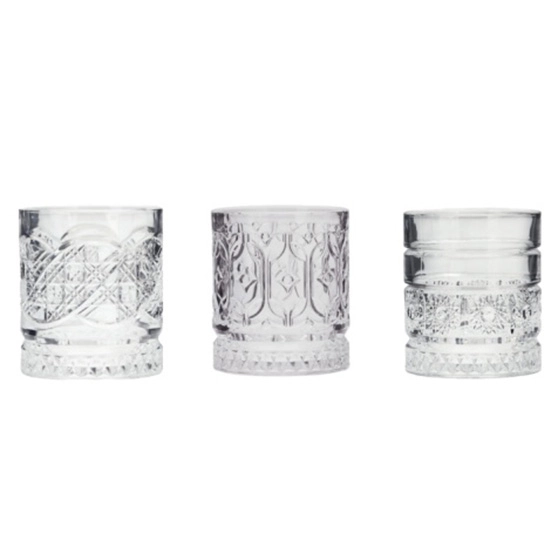
Before placing a large order, check the product identity, decoration brief, material record, sample approval, packaging, and reorder terms. That sequence keeps personalized bar glasses from becoming a vague design purchase. Perfect Select publishes model-level glassware information and supports buyers who need a clear product brief before discussing a bulk order.
The most expensive mistake is approving a look without recording the working details. A bar, hotel, retailer, or promotional program needs more than a logo idea. It needs one exact glass, one approved appearance, and one repeatable order record.
Personalized Bar Glasses: The Bulk-Buying Check
Start with the glass itself. Personalization should be added to a controlled product specification, not used to cover uncertainty about size, weight, or use.
Model Identity
Write the product family, model code, capacity, height, top diameter, width, and weight into the request. The Machine Pressed Whisky Glass page lists DLZ 060, DLZ 061, and DLZ 062 at 350 ml, 352 ml, and 350 ml, each 98 mm high with an 84 mm top diameter and 362 g weight. Those near-matching codes still belong in separate lines on a purchase sheet.
Service Fit
Decide whether the glass is for whisky, cocktails, a branded bar program, a gift set, or retail resale. A low, wide format may read differently on a bar top from a tall cocktail shape. The intended drink and serving routine should be stated before decoration is discussed.
Quantity Logic
Bulk does not only mean a larger number. It also means a stronger need for consistent approval. Separate the first order quantity from the expected reorder quantity, and note whether all cartons use one model or a planned mix of models.
Decoration Details That Need Written Approval
A personalized glass can be judged by its appearance, but production needs measurable instructions. Put the visual idea into words, dimensions, and an approval reference.
Artwork and Position
Supply the logo or artwork in the cleanest available format and describe its position in relation to the rim, base, and front-facing view. If the final artwork is not ready, mark the open field instead of allowing a supplier to guess the placement.
Color and Finish
Name the intended color, finish, and visual contrast. A dark mark on clear glass reads differently under bar lighting from a light mark on a colored surface. Ask how the approved appearance will be compared during production, and record the approved sample or image in the order file.
Use and Cleaning Routine
Tell the supplier how the glass will be used and handled in the venue. This does not replace a process specification, but it helps the discussion stay connected to the real bar, shelf, gift box, or retail display rather than only to a screen image.
Material, Process, and Quality Questions
A good bulk brief separates facts already published from questions that still need confirmation. This protects the buyer from turning an attractive product description into an unsupported promise.
Published Material
The Machine Pressed Whisky Glass page identifies lead-free crystal glass and lists restaurant, hotel, and bar use. Use that published information as the starting point, then ask whether the personalized version keeps the same material and base product specification.
Production Route
The page lists hand-blown processing alongside the product name. Because the naming and process wording should be kept precise, ask the supplier to confirm the production route for the selected model and decoration. Do not fill a missing process detail with an assumption.
Inspection Points
Agree on the points that can be checked: model code, capacity, dimensions, weight, clarity, rim finish, base seating, artwork position, color, and packaging identification. The point is not to create a long checklist for its own sake. It is to make the approved sample useful when the bulk order is reviewed.
A Shortlist for the Machine Pressed Whisky Glass
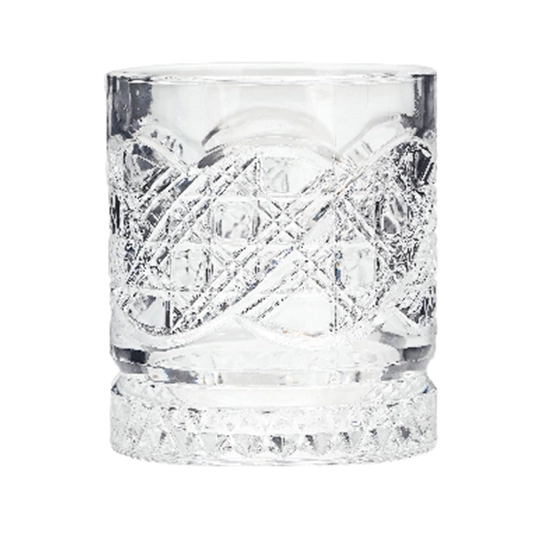
For a compact bar program, the Machine Pressed Whisky Glass range gives buyers three closely related model codes to compare. That makes it a practical shortlist when the project needs a consistent base shape and a clear personalization brief.
DLZ 060 for a Standard Brief
DLZ 060 is recorded at 350 ml, 98 mm high, with an 84 mm top diameter and 362 g weight. Use these values to define the base item, then add the artwork position, finish, quantity, and packaging requirement as separate fields.
DLZ 061 for Code Control
DLZ 061 is recorded at 352 ml with the same listed height, top diameter, and weight as the surrounding models. The small capacity difference shows why a buyer should not shorten the product description to a general name after artwork has been approved.
DLZ 062 for a Planned Variant
DLZ 062 is recorded at 350 ml, 98 mm high, with an 84 mm top diameter and 362 g weight. If a project uses several codes, put each one on its own line and state whether the decoration is identical or intentionally different.
| Model | Capacity | Height | Top Diameter | Weight | Base Decision |
| DLZ 060 | 350 ml | 98 mm | 84 mm | 362 g | Standard code |
| DLZ 061 | 352 ml | 98 mm | 84 mm | 362 g | Capacity variant |
| DLZ 062 | 350 ml | 98 mm | 84 mm | 362 g | Planned variant |
The comparison is taken from the product knowledge base. It is a model-control table, not a performance ranking. The buyer still needs a signed or otherwise recorded sample approval for the personalized appearance.
Bulk Order Controls Before the Purchase Order
Once the model and appearance are clear, move to the points that affect the commercial order. This is where a custom request becomes manageable for purchasing, marketing, and warehouse teams.
Sample and Tolerance
Approve one sample against the written brief. If a dimension, weight, artwork position, or color can vary within an agreed tolerance, record that tolerance before production. If no tolerance is agreed, the sample remains the most useful reference, but the buyer should not pretend the range is unlimited.
Packaging and Identification
Confirm the accepted packaging format, carton marks, model code, quantity per carton, and any custom color or gift box requirement. Custom packaging is listed as acceptable on the product page, but the final format still needs to be confirmed for the actual order.
Reorder File
Keep the model code, artwork file, approved image or sample description, packaging details, and quotation together. A clean reorder file prevents a new buyer or branch from selecting a visually similar glass with a different capacity.
A Practical Next Step for Personalized Bar Glasses
Order personalized bar glasses in bulk when the base model, artwork, finish, sample, packaging, and inspection points are all written down. If any of those fields remain open, the next step is clarification, not a rushed quantity commitment.
Brief the Supplier
Send the venue or retail use, target quantity, model code, drink role, artwork, finish, packaging expectation, delivery market, and requested confirmation points. A focused brief makes a quotation easier to compare.
Use the Service Route
For a coordinated product and packaging request, review the available glassware service route and ask which details should be confirmed before quotation.
Buying Decision
The right purchase is the one that another team member can reorder without calling the original designer to explain it. Prepare the model codes and approved artwork, then contact Perfect Select with the quantity and confirmation questions. The final quotation should make the personalized bar glasses easy to identify from the next order onward.

Post Comment