




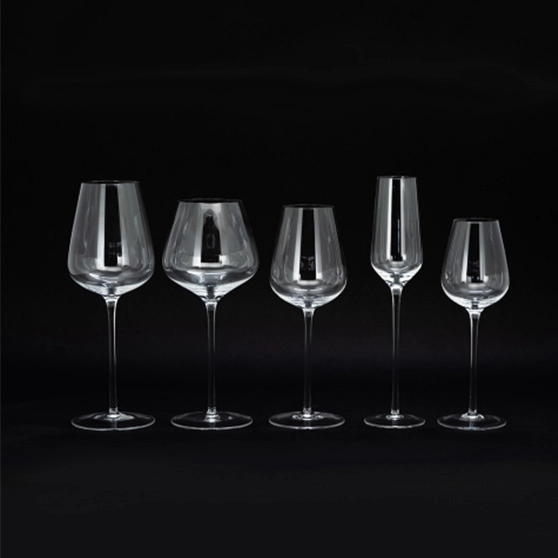
Buyers will choose wine glass shapes by service role, not by capacity alone. For 2026 orders, the useful B2B glassware product trends 2026 are straightforward: a broad bowl for red wine, a controlled shape for white wine, and a narrow profile for sparkling service. The range should look related on the table while giving each pour the right setting. Perfect Select supplies lead-free crystal glassware for restaurant, hotel, and bar projects. Its product section give buyers capacities, dimensions, weights, and processing details to review before a range is approved.
Which Wine Glass Shapes Will Buyers Choose in 2026?
At the table, bowl dimensions change the visual size of a pour and the way a glass sits on a tray or shelf. The useful shape is the one staff can serve without having to work around it.
Red Wine Bowls
Put a larger red-wine bowl on the shortlist when red wine has a visible place on the menu and the table needs a generous profile. It still has to clear the rack, fit the table, and suit the standard pour; the biggest bowl is not automatically the best one.
White Wine Profiles
White wine service often benefits from a smaller, more contained bowl. It keeps the presentation neat at lunch, on a terrace, or in a compact hotel restaurant where a tall, wide glass can feel out of place. Buyers should compare the top diameter and total height alongside capacity, because those measurements affect both hand position and storage.
Sparkling Silhouettes
A sparkling glass has a different job from a red wine glass. The narrow visual profile supports a formal toast and creates a clean line on a banquet table. When the same series includes a sparkling option, a buyer can keep the stem, clarity, and overall design language aligned across the menu.
Capacity Is a Service Decision, Not a Style Detail
Capacity is often the first specification shown on a product list, but it should be read with the bowl, height, and rim. A 780 ml glass and a 540 ml glass can both serve red wine, yet they create different expectations for the table and different storage demands for the back of house.
Pour Control
Choose the bowl around the intended pour rather than filling it to its full listed capacity. A larger bowl can give a small pour more presence, while a moderate bowl can make a standard service look measured. The decision should be written into the venue’s service guide so staff do not treat capacity as a target fill line.
Shelf and Tray Fit
Height and width become real costs when glasses are stored in racks, carried on trays, or arranged at a narrow pass. Before approving a model, measure the shelf opening, the rack spacing, and the usual tray layout. This small check prevents an elegant shape from becoming an awkward fit in daily service.
B2B Glassware Product Trends 2026: Shape Signals by Venue
The strongest B2B glassware product trends 2026 are visible in how buyers group shapes around service scenes. The purchasing argument should be specific enough for a buyer to defend internally.
Restaurants and Hotels
A hotel or restaurant often needs one range that can move from everyday dinner service to a private room. Matching stem and finish keep the table coherent, while the bowl still tells staff which glass belongs with each drink.
Banquets and Events
Banquets need a shape that reads clearly from a distance and arranges cleanly on a table. Sparkling glasses with a tall profile can create a formal line for a toast, while a moderate wine glass can be easier to place beside multiple courses. The event schedule should decide the range, not a single photograph.
| Model | Listed Use | Capacity | Height | Top Diameter | Width | Weight |
| DLZ 007 | Red wine | 780 ml | 290 mm | 70 mm | 104 mm | 173 g |
| DLZ 008 | Red wine | 770 ml | 268 mm | 72 mm | 115 mm | 163 g |
| DLZ 009 | Red wine | 540 ml | 260 mm | 58 mm | 91 mm | 157 g |
| DLZ 010 | Champagne | 260 ml | 295 mm | 45 mm | 61 mm | 103 g |
| DLZ 011 | White wine | 355 ml | 245 mm | 54 mm | 80 mm | 127 g |
How to Compare a Series Before You Order
Once the service role is clear, compare the range in a fixed order. This keeps the buying conversation focused and makes a later reorder easier because the original decision has a written logic.
Published Dimensions
Start with capacity, height, top diameter, width, and weight. These values reveal more than a product name. They help you check rack fit, handling feel, visual proportion, and whether two models can share the same service station without confusion.
Material and Process
The Noble Series page identifies lead-free crystal glass and hand-blown processing. Put those facts in the brief, then ask how the rim, stem, base, clarity, and sample-to-production consistency are checked. Those are the details that make a product description useful to a purchasing team.
The Noble Series as a Practical Buyer Shortlist
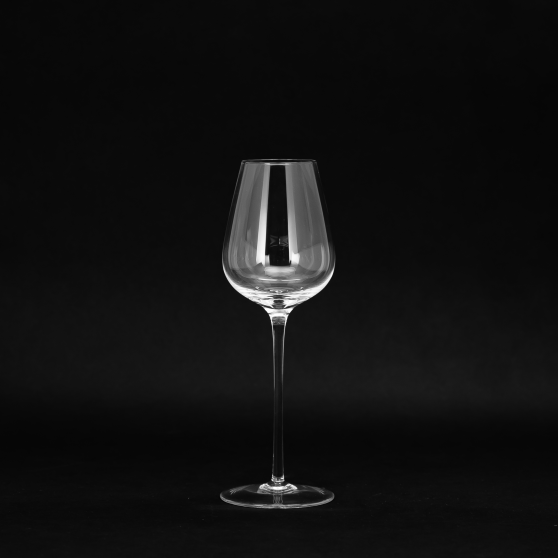
For buyers who want one coordinated starting point, the Noble Series wine-glass range offers five listed models for red, white, and sparkling service.
Large Red Wine Service
The page records DLZ 007 at 780 ml, 290 mm high, with a 70 mm top diameter and 104 mm width. DLZ 008 comes in at 770 ml, 268 mm high, with a 72 mm top diameter and 115 mm width. On a rack, that difference in height and width is worth checking before either model is approved.
Moderate Red and White Service
DLZ 009 records 540 ml, 260 mm in height, a 58 mm top diameter, and 91 mm width. DLZ 011 is the white wine option at 355 ml, 245 mm high, with a 54 mm top diameter and 80 mm width. Together, they give a restaurant a clear red-versus-white distinction without mixing unrelated designs.
Sparkling Add-On
DLZ 010 is the series champagne glass, with 260 ml capacity, 295 mm height, a 45 mm top diameter, and 61 mm width. It extends the range to toast service without changing the overall series identity. Check event frequency and storage before adding it to a standing order.
A Clear Purchase Path with Perfect Select
The best 2026 decision is the model that fits the drink program, table setting, storage system, and reorder plan. Use the model code and published dimensions in the brief, then confirm the sample, finish, packaging, and inspection points before production.
Product Brief
Send the venue type, drink list, intended pour, storage measurements, target quantity, and preferred model codes. This gives the supplier enough context to discuss a shape as a working item rather than as a picture.
Service and Confirmation
Bring Perfect Select into the sourcing discussion for a coordinated range, custom packaging, or an OEM brief. Ask for the service details that apply, put the final specification in writing, and attach the approved sample to the purchase record.
Contact and Buying Judgment
Choose Noble Series models when your operation values a consistent visual family across red, white, and sparkling service. If the range does not match your rack, pour, or menu, ask for a different shape before ordering. For the next step, prepare the model codes and quantities, then use Perfect Select’s service and contact channels to request a focused quotation.

Post Comment