




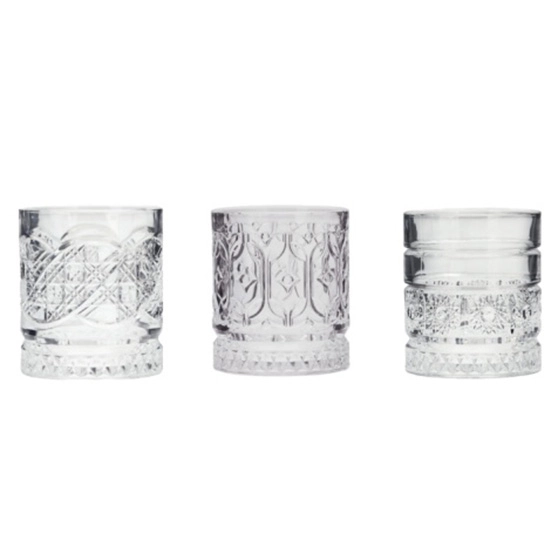
Good care for home bar accessories is less about complicated routines and more about timing. Rinse before residue dries, clean without rough tools, dry with a dedicated cloth, and keep glassware away from metal tools. Perfect Select supplies daily-use glassware and barware with product development, production, packaging, and export support. For whisky-focused shelves, the Machine Pressed Whisky Glass gives a practical example because its page lists lead-free crystal glass, retro carved textures, a smooth inner wall, and clear care notes for textured glass.
Care Starts Before the First Pour
Many glassware problems begin in ordinary moments: residue left overnight, tools resting against the rim, or the wrong towel used in a hurry. In a small home bar, glassware, jiggers, spoons, and ice tools often share one tray, so little contacts happen easily.
Rinse Timing
Rinse whisky glasses before residue dries. This is the easiest habit to keep and one of the most useful for home bar accessories that sit near citrus, bitters, syrup, or hard water. A quick rinse also makes the final wash shorter.
Dedicated Drying Cloth
Use a clean microfiber cloth for glassware only. A towel that has already touched cookware can leave oil, lint, or faint marks. It sounds fussy until you see one glass dry cleanly beside another that dries with spots.
Separate Tool Storage
Give metal spoons, muddlers, peelers, and bottle openers their own spot away from the glass rim. A divider or separate tray corner is usually enough.
Prevent Water Spots With Simple Drying Habits
Water spots are usually a drying problem, not a glass problem. Minerals stay behind when water dries on the surface. The answer is not harder scrubbing. Dry sooner and use a softer finish.
Warm Mild Cleaning
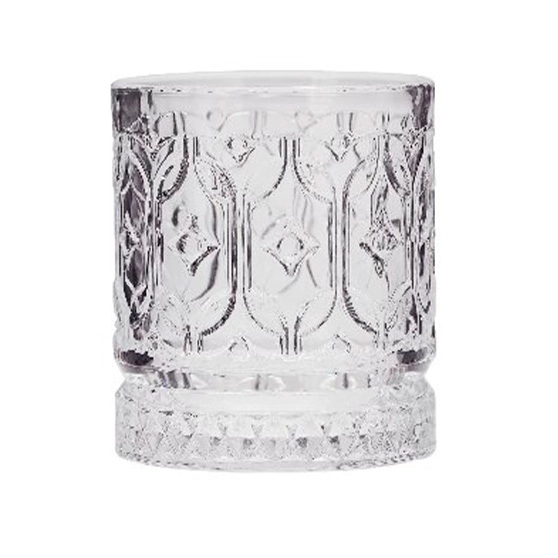
The Machine Pressed Whisky Glass section describes a smooth inner wall and easy cleaning. Use mild cleaning steps around carved textures, and keep strong acid or alkali cleaners out of the routine. The texture is part of the design, so clean it patiently instead of pressing hard.
Immediate Soft Drying
Dry the glass before water dries on its own. Dry the inside bowl first, then the rim, outside wall, and base. For textured areas, let the cloth reach the grooves with light pressure.
Airflow After Cleaning
After drying, leave home bar accessories with enough airflow before they return to a closed cabinet. A few minutes on a clean mat can help moisture leave carved bases, textured sides, and tray corners.
Reduce Scratches on Textured Whisky Glasses
The drink is rarely the problem; the cleaning tool often is. This matters for machine-pressed whisky glasses because the carved surface is meant to be seen and felt.
No Abrasive Cleaning Tools
The product page says to avoid abrasive cleaners. That is especially important for prismatic, striped, relief, and other carved textures. Use a soft sponge or cloth, then slow down where the pattern is deepest.
Glass-to-Glass Contact
Avoid letting glass rims knock together during storage. If you keep a set on an open shelf, leave a small gap between pieces. For retail or hospitality sample rooms, spacing also makes the display look more deliberate.
Tool Tray Discipline
A home bar tray can become crowded fast. Keep sharp or metal bar tools in their own section, and put glassware on the quiet side of the tray. This tiny habit protects both the glass and the look of your home bar accessories.
Control Impact and Temperature Risks
A care guide should talk about risk without turning the product into a warning label. The practical point is simple: avoid hard knocks, sudden temperature changes, and storage that makes accidental contact likely.
Hard Surface Contact
Set glasses on a stable surface, away from the sink edge or a crowded counter. A bar mat, folded towel, or clean drying pad gives the glass a better landing zone during cleaning and setup.
Sudden Temperature Change
The product page notes thermal sensitivity and warns against sudden cooling or heating, so gradual changes are the safer habit. For daily care, keep temperature changes gradual. Do not move a glass from one extreme condition to another during cleaning or service.
Busy-Bar Handling
In a home party setting, most accidents happen during reset: clearing ice, rinsing glasses, finding the jigger, and making the next drink. Give used glassware one landing place so it does not compete with bottles and tools.
Specs That Affect Care Planning
Product specs help you plan care for home bar accessories because size, weight, and texture affect how a glass is washed, dried, and stored. The table below uses listed figures from the Machine Pressed Whisky Glass page.
Machine Pressed Model Checks
The three visible models are close in size, which helps if you want a matched whisky glass set with different carved patterns.
| Machine Pressed Whisky Glass | Listed Figure | Care Planning Note |
| DLZ 060 | 350 ml, top diameter 84 mm, height 98 mm, weight 362 g | Plan shelf spacing for a wider whisky rim and textured base |
| DLZ 061 | 352 ml, top diameter 84 mm, height 98 mm, weight 362 g | Useful when the same hand feel is needed across a set |
| DLZ 062 | 350 ml, top diameter 84 mm, height 98 mm, weight 362 g | Works for matched service where pattern choice carries the visual difference |
| Material and Color | Lead-free crystal glass, clear transparent | Keep drying cloths clean so clarity stays easy to see |
Texture and Grip
The page describes geometric checks, bionic blade patterns, prismatic, striped, relief, and other carved textures. These details add visual interest and a concave-convex touch when held. They also deserve careful cleaning in the grooves.
Sample Review Before Bulk Orders
Before ordering a larger set, check one sample for rim feel, texture finish, base balance, inner-wall smoothness, logo position, and packaging fit. Care problems are much easier to prevent when the sample review includes cleaning and storage, not only appearance.
Choose Service and Contact Support for Better Barware Care
Care starts with the product, but it also depends on supplier detail. The factory background includes glassware and barware experience, product development, production, deep processing, and QC checks for glass mouth, weight, and size.
Service Details for Custom Orders
The service section lists mold proofing, artwork design, polishing, base connection, and other production steps. For branded whisky glasses, those steps can affect logo placement, texture choice, packaging, and sample approval.
Inquiry Information to Send
Send the model number, target quantity, packaging needs, logo plan, sample request, and intended use. If the glass will be sold as part of a care-focused set, mention the care card or retail box requirement early.
Final Care Judgment
The best care plan for home bar accessories is not complicated: gentle cleaning, prompt drying, careful storage, and a sample review that includes real handling. If you are planning a whisky glass project, use the contact channel to confirm model details, packaging, and sample timing before the order moves forward.

Post Comment