




Before calculating a banquet glass order, try the intended pour in a sample and check that sample against the venue’s trays and storage. Then work out how many glasses will be occupied at each stage of service. Guest count alone misses the glasses still in use when the next tray is needed, particularly if a toast runs beyond its planned time.
Consider two overlapping services: guests in one room still hold their toast glasses while another room begins serving welcome drinks. The building may own enough glasses in total and still have too few available for the second service. Follow the stock through the event by time and location. That also shows whether the proposed reserve has somewhere suitable to be stored.
Agree on the Drink Before Discussing the Glass
“For weddings and events” leaves quite a lot undecided. Will the glass hold one toast, circulate with a welcome drink, or stay in use over dinner? Put the main job first. A venue sharing stock between departments needs that agreement before the purchasing team collects samples; otherwise each department may approve the glass for a different reason.
Get the beverage team’s intended measure in writing. Then look at the capacity on the quotation: what exactly was measured? If the supplier filled the vessel to its brim, that number describes a very different situation from a drink being carried across a room. The sample lets you put your own measure in and judge the space left above it, without trying to settle the question from two numbers alone.
For a simple planning example, suppose the chosen measure were 125 ml. Six of those measures would account for 750 ml, before any losses. The venue must choose its own pour, of course. But what happens if somebody tops up each sample a little because the bowl looks rather empty? You are now looking at a different serving plan. Better to have that discussion at the sample meeting than after the beverage quantities are agreed.
Put several filled samples on a dressed table and sit down. Does the agreed measure look right from a guest’s position? At the sample meeting, make room for the water glass, plates, and centrepiece as well. That way the beverage team and the person arranging the tables won’t be approving two different pictures of the same event.
Take Measurements to the Stockroom
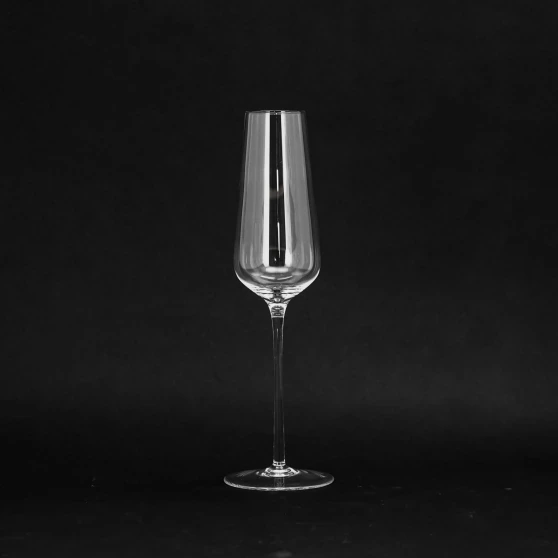
Suppose your team likes one of the flute or tulip options in the Champagne Glasses range. Before choosing it, add the dimensions to your sample notes. You need the overall height and both the widest bowl diameter and foot diameter. A photograph won’t tell you whether the broadest point is the bowl or the foot, so don’t choose the storage compartment from the silhouette alone.
Decide whether storage can change before comparing glass prices. A sample may fit under a shelf yet be awkward to lift out. If the shelf can be moved, include that work in the purchase plan. If it cannot, restrict the shortlist accordingly. Buying a glass that suits the present storage and buying one that requires altered storage are different proposals.
Take the sample to an actual compartment rack used by the venue and refer to that rack’s limits. Equal compartment counts do not guarantee equal clearance. If the fit is tight, reconsider it instead of forcing the glass in. Where racks will be stacked, check the permitted arrangement with the rack above in place.
Ask the glass supplier about cleaning separately. Fitting a dishwasher rack does not establish that the glass may be machine washed. Use the care instructions confirmed for this item. A venue that depends on dishwashing needs that requirement resolved before selecting the model, preferably before samples are requested.
Count Champagne Glasses for Banquets by Service Period
Give each service period a column on the stock sheet and account for where the glasses will be. Some will be laid out, others still with guests, and some waiting for cleaning; only the remainder is a clean reserve. Counting the same glass for two rooms creates a shortage on paper before the event has begun. This is more useful than applying an unexplained multiple to guest count.
Here is a planning example, using invented numbers. There are 180 glasses laid for a toast and another 60 at a separate welcome reception. The second group won’t be back before the toast starts. The count is already 240, even though no reserve has been added yet. It’s the overlap doing that, not a rule that says every booking for 180 guests needs the same stock.
“Cleared” and “ready to use” deserve separate entries on the timeline. Between them comes the permitted cleaning process, drying, inspection, and the journey back to service, including any waits along the way. In a rehearsal you can record both times and see how large that gap really is. Otherwise you can end up promising glasses to the next room while they are still sitting in the cleaning area.
Treat the reserve as a line someone has to explain. Does it come from experience at this venue, or was it borrowed from a different type of event? Either way, look at the current schedule before accepting it. With champagne glasses for banquets, an unexplained percentage is much harder to reuse than a few clearly stated assumptions.

Give the Sample to the People Handling It
One glass is enough to spot an obvious mismatch with a shelf. For the tray decision, ask for a small sample group. The person who will carry it should try the proposed arrangement along the normal route, including that turn at the station. You may settle on fewer glasses per trip. If so, the service plan needs the new number rather than the number someone initially hoped would fit.
Use the tray trial to establish a load staff can handle comfortably on the actual route. Stop if the tray is unstable or glasses touch. Testing the largest possible load adds little to a purchasing brief; an agreed arrangement that works with the venue’s equipment gives staff a usable limit.
The cleaning team may notice something the buyer misses: access inside the bowl takes time, and the cleaned glasses need space to dry. Have that team try the permitted routine with the sample before purchase. Their observations belong beside the unit price when comparing shapes for the venue.
When discussing champagne glasses for banquets with Perfect Select, send the model reference together with the intended measure, equipment limits, quantity, and date needed. Include anything the rehearsal has ruled out. “Foot too wide for our existing compartments” gives a supplier a useful constraint; “please suggest something better” leaves the same decision open.
Keep Approval Details with the Order
Retain the sample with a dated model reference and its measurements and care instructions. When a different buyer handles the next order, those details explain the earlier choice. A proposed substitute must still fit the compartment that mattered at approval, even if it looks almost the same.
If the collection also has a colour requirement, treat that as another approval. The questions in colour-matched stemware planning belong alongside the fit decision. An accepted colour sample should not quietly approve a changed bowl or stem. Keep champagne-glass references separate from wine-glass references when several models share a finish.
Receiving staff need the box counts, carton dimensions and item references while there is still time to question the packing proposal. The supplier also needs to confirm timing for this order against the event date. Once agreed, make sure the venue staff who handle and clean the glasses receive the care instructions.
Conclusion
You will get more from a quotation for champagne glasses for banquets if the practical decisions have already been discussed at the venue. Keep the chosen sample, the peak count, and the reasons behind that count together. You can then discuss service and contact the team with a brief that includes the packing and arrival date as well. The supplier won’t have to guess how you intend to use the order.

Post Comment